In the dynamic world of product development, understanding your user isn't just a nice-to-have; it's the bedrock of success. But how do you truly get inside their heads, beyond mere demographics? That's where a powerful duo — user profiles (personas) and user scenarios — step in. The question isn't if understanding users matters, but Is it Right for You? User Profiles & Scenarios are the specific tools that can bridge the gap between assumption and empathy, transforming your project from guesswork to informed design.
These aren't just academic exercises. They're practical, data-driven instruments that illuminate your target audience, making their needs, motivations, and pain points tangible. They help teams speak the same language about users, guiding decisions from feature prioritization to interface design. But like any powerful tool, knowing when and how to wield them effectively is crucial.
At a Glance: What You'll Learn
- User Personas Explained: Fictional, data-backed profiles representing your key users.
- User Scenarios Defined: Stories illustrating how personas interact with your product to achieve a goal.
- Why They Matter: How they enhance user experience, guide development, and reduce assumptions.
- How to Create Them: Step-by-step guides for crafting effective personas and scenarios.
- Integration into Your Workflow: Using them dynamically in UX, design, and Agile development.
- Deciding If They're Right For You: Key considerations for your project's specific needs.
- Best Practices: Tips for making them impactful and avoiding common pitfalls.
Beyond Demographics: What Exactly Are User Personas?
Imagine building a house without knowing who will live in it. You might guess, based on typical families, but you'd miss the specific needs of a retired couple who want single-floor living, or a young family needing a playroom. User personas solve this exact problem for your product.
A user persona is a semi-fictional representation of your ideal or typical user, based on real data and extensive research. Think of them as detailed character sketches, not just a list of traits. They provide a human face to your user data, including:
- Demographics: Age, location, occupation, income.
- Behaviors: How they currently achieve tasks, their digital literacy, habits.
- Psychographics: Goals, motivations, frustrations, pain points, aspirations.
- Context: The environment in which they'll use your product.
- Even a name and photo: To make them feel real and relatable to your team.
Personas help you segment your diverse user base into manageable, actionable profiles, allowing you to design solutions that genuinely resonate with specific groups rather than a generic "everyone."
Setting the Stage: What Are User Scenarios?
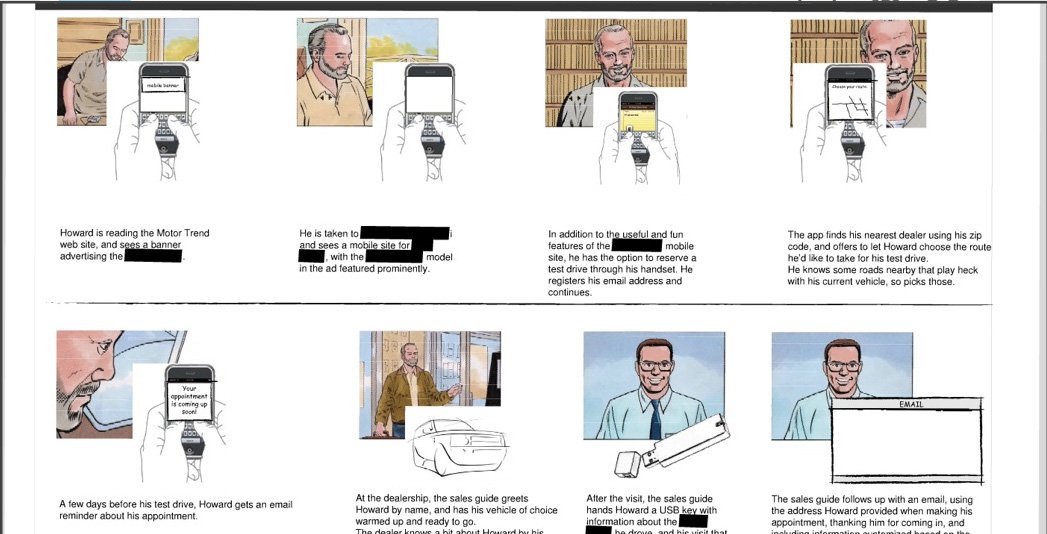
Once you have your personas, what do they do? This is where user scenarios come in. A user scenario is a narrative, a story that describes how a specific user persona interacts with your product or service in a particular context to achieve a goal.
It's not just "User logs in." It's "Sarah, a busy Digital Marketing Specialist, needs to quickly check her campaign's performance before her morning team meeting."
A scenario typically outlines:
- The Persona: Who is performing the action?
- The Goal: What does the persona want to accomplish?
- The Trigger/Problem: What initiates the interaction?
- The Context: Where, when, and how are they using the product (e.g., on a mobile device during a commute, on a desktop in the office)?
- The Steps/Actions: The sequence of interactions with the product.
- The Outcome/Result: What happens, and does it meet the persona's goal?
Scenarios transform abstract personas into concrete, actionable narratives. They map the user journey, highlight opportunities for your product to shine, and expose potential friction points.
Why Bother? The Transformative Power of Personas and Scenarios
You might be thinking, "This sounds like a lot of work. Can't we just build the product?" While tempting, skipping this step is akin to building a bridge without surveying the terrain or understanding the traffic it needs to bear. The cost of fixing a poorly designed product post-launch far outweighs the investment in upfront user understanding.
Here's why personas and scenarios aren't just good practice, but often essential:
- Elevate User Experience (UX): By designing for real people with documented needs, you create products that are intuitive, satisfying, and truly solve problems.
- Guide Feature Development: They help prioritize features. Instead of building every cool idea, you build what genuinely serves your key personas' goals and pain points.
- Minimize Assumptions: Every team, without concrete user data, operates on assumptions. Personas, grounded in research, replace these guesses with data-driven insights, reducing costly reworks.
- Foster Empathy Across Teams: When developers, designers, product managers, and marketers can all visualize and talk about "Sarah" or "Mark," it creates a shared understanding and a user-centric culture.
- Validate Design Decisions: When debating a design choice, you can ask: "Would Sarah understand this? Does this help her achieve her goal efficiently?"
- Provide Context and Goals: They articulate why users engage with your product and the specific conditions under which they do so, beyond just how.
Ultimately, they help you build the right product for the right people.
Crafting Your User Profiles: A Step-by-Step Guide to Personas
Creating effective personas isn't about artistic liberty; it's a scientific process. Here's how to do it:
Step 1: Dive Deep with User Research
This is the foundation. Personas are only as good as the data they're built upon.
- Interviews: One-on-one conversations are invaluable for uncovering motivations, frustrations, and underlying needs. Ask open-ended questions.
- Surveys: Gather quantitative data on demographics, behaviors, and preferences from a larger audience.
- Observations: Watch users interact with existing products or perform tasks relevant to your domain. This reveals unspoken behaviors.
- Analytics: Review website traffic, app usage, customer support logs, and sales data for behavioral patterns.
Look for both qualitative (the "why") and quantitative (the "what") data.
Step 2: Synthesize Your Findings
Once you've collected a mountain of data, it's time to make sense of it.
- Affinity Diagrams: Write down individual observations on sticky notes and group similar themes. This helps you identify patterns and commonalities.
- Look for Behavioral Patterns: Don't just group by demographics. Focus on similar goals, pain points, and ways of interacting with technology. These will define your user segments.
- Define Core Attributes: What are the 3-5 most important characteristics that define each segment?
You'll likely find 3-5 distinct persona types emerge. Too many and they lose their focus; too few and you risk oversimplification.
Step 3: Bring Your Personas to Life
Now, for the creative part – giving your data a human face. For each persona, create a detailed profile:
- Fictional Name & Photo: Choose a realistic name and find a stock photo that visually represents them. This makes them memorable and relatable.
- Demographics: Age, occupation, location, family status.
- Background/Bio: A brief narrative about their life, career, and typical day.
- Goals: What are they trying to achieve in relation to your product's domain? (e.g., "streamline work processes," "find reliable information quickly").
- Challenges/Pain Points: What obstacles do they face? What frustrates them?
- Motivations: What drives their decisions? What do they value?
- Technology Proficiency: How comfortable are they with digital tools?
- Quote: A representative quote that encapsulates their attitude or goal.
Example Persona Snapshot:
Sarah Lee, 28 - Title: Digital Marketing Specialist
- Location: San Francisco, CA
- Background: Sarah manages social media campaigns and digital ads for a mid-sized tech startup. She's tech-savvy but constantly feels crunched for time, juggling multiple platforms and tight deadlines. She enjoys learning new digital tools but needs them to be intuitive and efficient.
- Goals: Optimize social media engagement, accurately track campaign ROI, stay updated on industry trends, advance her digital skills.
- Challenges: Time constraints, managing multiple social accounts, proving ROI to her boss, keeping up with rapidly changing algorithms and tools.
- Motivations: Career growth, recognition for successful campaigns, efficiency, learning.
- Quote: "I need tools that save me time and give me clear insights, not more busywork."
Bringing Them to Life: Crafting Compelling User Scenarios
With your personas defined, it's time to see them in action. Scenarios are your storyboards for user interaction.
Step 1: Define Goals and Tasks
Start with what your persona wants to do with your product. These are often expressed as user stories or "jobs to be done."
- "As a Digital Marketing Specialist, I want to easily schedule social media posts so that I can save time and focus on content strategy."
- "As a small business owner, I want to quickly generate invoices so that I can get paid faster."
Step 2: Imagine the Context
Where and how would your persona typically use your product?
- Device: Laptop at the office, smartphone on the go, tablet at home?
- Environment: Busy café, quiet office, commuting?
- State of mind: Stressed, relaxed, focused?
- Frequency: Daily, weekly, occasionally?
Step 3: Map the User Journey
Think about the specific steps a persona would take.
- Entry Point: How do they begin? (e.g., open app, click email link, search Google).
- Key Actions: What are the critical interactions with your product?
- Decision Points: Where might they pause or choose a different path?
- Pain Points/Opportunities: Where could the experience be smoother or more delightful?
- Exit Point: What's the final outcome?
Tools like storyboards or flowcharts can be incredibly helpful here.
Step 4: Write the Narrative
Translate your journey map into a detailed, readable story.
Example Scenario:
Scenario Title: Sarah's Morning Social Media Check & Adjustment
Persona: Sarah Lee, Digital Marketing Specialist
Goal: Efficiently review and adjust scheduled social media posts for the day based on recent analytics and trending topics, ensuring optimal engagement.
Context: It's 8:30 AM, Monday. Sarah is at her desk with her laptop, sipping coffee, preparing for her 9 AM team stand-up. She needs to quickly confirm her social content plan.
Narrative:
Sarah logs into her social media management tool. The dashboard immediately shows her key performance metrics from the weekend. She notices a recent Instagram post performing unexpectedly well and an older Facebook post underperforming. Her scheduled posts for the day are prominently displayed. Sarah clicks into the underperforming Facebook post's analytics to understand why, then quickly edits the text and swaps an image for a more engaging video she created last week, rescheduling it for later in the afternoon. Next, she uses the tool's trending hashtags feature to quickly browse relevant current topics, adding a few new, high-potential tags to her scheduled LinkedIn post. She sets a reminder within the tool to revisit these changes after her stand-up.
Expected Outcome: Sarah feels confident that her social media content is optimized and relevant, saving her precious time before her meeting and allowing her to focus on broader content strategy.
Integrating Personas & Scenarios into Your Workflow
Personas and scenarios are not static documents to be filed away. They are dynamic, living tools that should inform every stage of your project.
Throughout the UX Process
- Ideation: Use them to brainstorm new features or solutions that address specific persona pain points.
- Design: Refer to them constantly when making layout, navigation, and interaction design decisions.
- Prototyping: Build prototypes that allow your personas to complete their scenarios.
- Usability Testing: Recruit participants who closely match your personas and ask them to perform tasks derived from your scenarios. This validates your designs against real user behaviors.
In Agile Development Teams
- Sprint Planning: Transform user scenarios into user stories, which are the backbone of Agile backlogs.
- Example: "As Sarah Lee, a Digital Marketing Specialist, I want to easily edit scheduled social media posts so that I can react quickly to performance data and optimize engagement."
- Backlog Refinement: Use personas to prioritize user stories, ensuring that the highest-value features for your key users are built first.
- Sprint Reviews: Demonstrate new features by walking through how a persona would use them to achieve a scenario goal.
- Retrospectives: If a feature isn't landing well, revisit the persona and scenario to understand where the disconnect occurred.
They become a common language for the entire team, making discussions around "the user" far more concrete and actionable.
When Are They "Right for You"? Decision Criteria
While invaluable, implementing personas and scenarios requires an investment of time and resources. So, how do you decide if they're the right fit for your next project? Just as you'd meticulously evaluate whether Is Chase Sapphire Reserve worth it for your personal finances, you need to weigh the commitment against the potential return for your project.
Consider these factors:
- Project Complexity & Scope:
- Yes, definitely: Large, complex projects with diverse user bases, or products aiming for significant market disruption. The more critical user understanding is, the more essential these tools become.
- Potentially less critical (but still valuable): Very small, niche projects with a single, clearly defined user type, or internal tools where users are already well-known. However, even here, a light version can prevent missteps.
- Existing User Knowledge:
- Yes, definitely: If you're entering a new market, launching a new product, or if your current understanding of users is limited or outdated.
- Potentially less critical: If you have extensive, recent, and validated user research data that your team already deeply understands and applies. (Though even then, personas help standardize that understanding.)
- Team Size & Communication Challenges:
- Yes, definitely: Large, distributed teams or teams with high turnover benefit immensely from a shared, tangible representation of the user. They become a unifying communication tool.
- Potentially less critical: Very small, co-located teams where direct communication about users might be more frequent.
- Risk Tolerance:
- Yes, definitely: Projects where the cost of failure (due to poor user adoption or feature misalignment) is high. Investing in user understanding reduces this risk.
- Potentially less critical: Experimental projects with low stakes, where rapid iteration and learning through trial-and-error are the primary goals (though even here, basic personas can offer guidance).
- Available Resources (Time, Budget, Expertise):
- Practical consideration: While beneficial, creating robust personas and scenarios requires time for research and synthesis. If you're severely constrained, consider a "lean persona" approach: focus on 1-2 core personas with minimal data, and build from there. It's better to start lean than not at all.
In most cases, the benefits of using user profiles and scenarios far outweigh the investment. They empower teams to build products that users genuinely want and need, leading to higher adoption, satisfaction, and ultimately, business success.
Common Misconceptions & Pitfalls to Avoid
Even with the best intentions, it's easy to stumble when creating and using personas and scenarios.
- "They're just made-up people.": This is the biggest misconception. Personas are data-driven. If they're based on assumptions or stereotypes, they're useless (or worse, misleading). Always back them with research.
- Creating too many personas: While diversity is good, having 10+ personas can dilute focus and make design overwhelming. Focus on the 2-5 most critical segments.
- Making them overly generic: A persona that represents "everyone" represents no one. They need specific goals, pain points, and behaviors to be actionable.
- Failing to share and integrate: Personas and scenarios gather dust if they're not visible and actively used by the entire project team. Print them out, put them on whiteboards, integrate them into meetings.
- Treating them as static documents: Users evolve, markets change, and your product iterates. Personas and scenarios need to be reviewed and updated regularly (e.g., annually, or after major research initiatives).
- Confusing personas with market segments: While related, market segments define who you market to (e.g., "small business owners"), while personas define who you design for (e.g., "Sarah, the busy Digital Marketing Specialist"). Personas are far more detailed and actionable for design.
- Scenarios without personas: Without a clear persona, a scenario lacks context and motivation. Who is doing this? Why? What are their frustrations?
- Scenarios that are too linear or simplistic: Real user journeys are rarely perfect. Include potential roadblocks, alternative paths, or emotional states to make scenarios more realistic.
Best Practices for Real-World Impact
To ensure your personas and scenarios truly drive your project forward, keep these best practices in mind:
- Start with Research, Always: Ground everything in qualitative and quantitative data. No exceptions.
- Collaborate Widely: Involve stakeholders from across the organization (sales, marketing, support, development) in the persona creation process. This builds buy-in and incorporates diverse perspectives.
- Keep Them Concise and Actionable: While detailed, a persona should be quickly digestible. Focus on the information that truly impacts design decisions. Scenarios should be clear and to the point.
- Visual Representation Helps: A photo, a simple infographic, or a compelling summary card makes personas more memorable. Storyboards or simple flowcharts aid scenario comprehension.
- Make Them Visible: Display personas and key scenarios prominently in your workspace. Refer to them constantly in meetings.
- Iterate and Refine: As you learn more about your users (through testing, analytics, feedback), update your personas and scenarios. They are living documents.
- Focus on Goals and Pain Points: These are the most critical elements for guiding design. What problem is the user trying to solve, and what stands in their way?
- Use Them to Tell Stories: A well-crafted persona and scenario can be a powerful storytelling tool to advocate for user needs and justify design decisions to stakeholders.
The Journey Continues: Iteration & Evolution
User profiles and scenarios aren't a "one and done" task. The digital landscape, user behaviors, and business goals are constantly evolving. Treat your personas and scenarios as dynamic tools that mature alongside your product and your understanding of its users.
Regularly revisit your research, gather new insights, and update these foundational documents. This iterative process ensures that your project remains truly user-centric, adapting to change and continuously delivering value to the people who matter most: your users. By embracing this approach, you'll not only build better products but also foster a culture of empathy and data-driven decision-making throughout your organization.